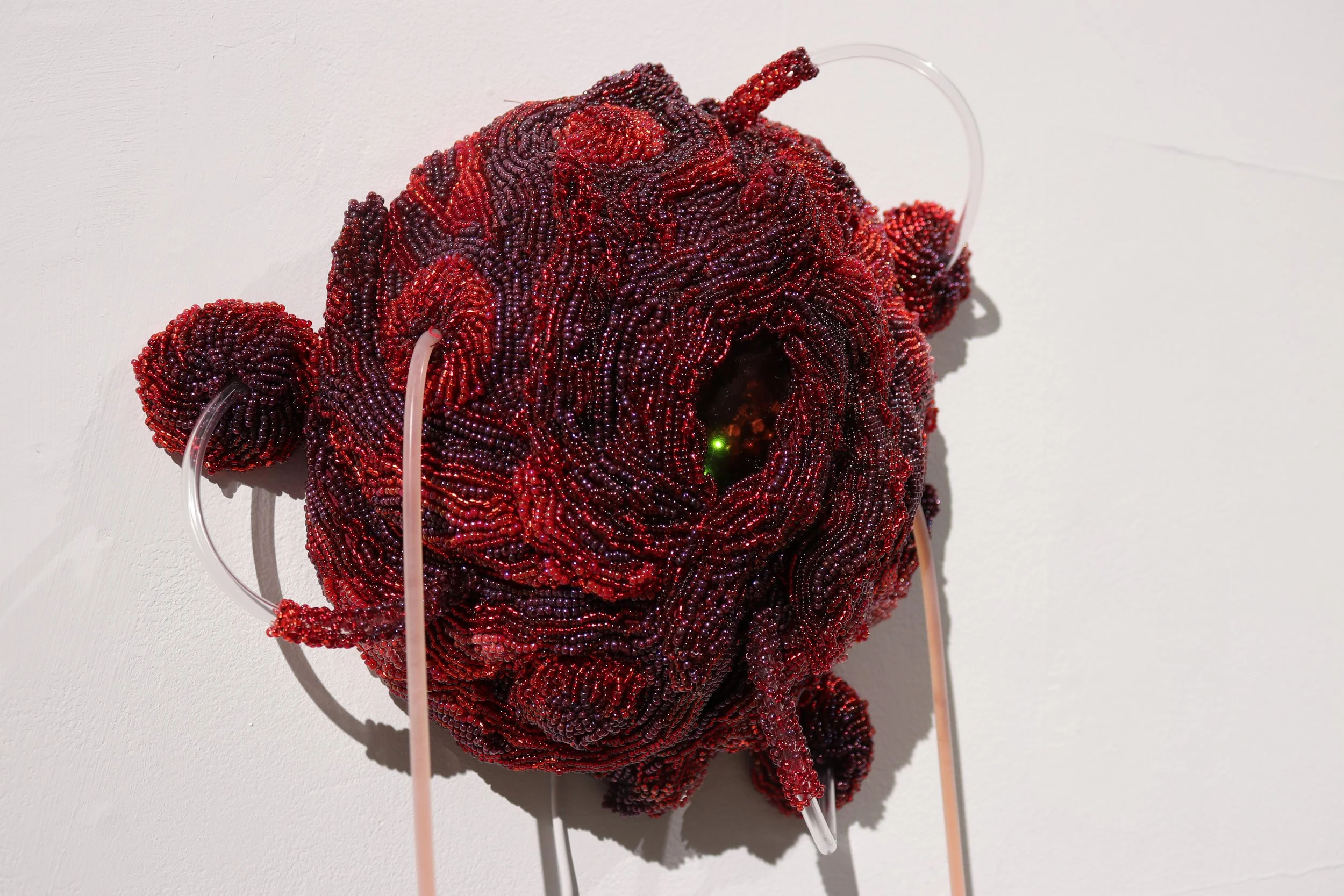
Circulation of Sappanwood
2025
Dried sappanwood pods, sappanwood dye, sappanwood tea, glass seed beads, blown glass, cotton fabric, microcontroller, peristaltic pump, PVC tubing
Sappanwood is a hardwood historically used in Southeast Asia for multiple purposes. In local Indonesian communities, it is brewed into tea. Thin slices of its heartwood (inner core of the tree) are boiled to produce a herbal drink traditionally believed to provide antioxidant and anti-inflammatory benefits and to support healthy blood circulation. It has also historically been valued in Southeast Asia as a natural source of red dye. The heartwood contains brazilein, the compound responsible for producing deep red and brown hues. In Indonesia, this natural dye was traditionally used to color batik textiles. During the Dutch colonial period (17th to mid-20th century), sappanwood became a valuable trade commodity, exported to Japan in exchange for copper, which the Dutch then traded for cotton textiles from India. This network integrated Indonesian resources into global markets. I wonder, though, who truly benefited from these resources, and whether there was any reciprocity toward the earth.